
Long-form theatre journalism and opinion covering Broadway, the Tony Awards, and beyond.
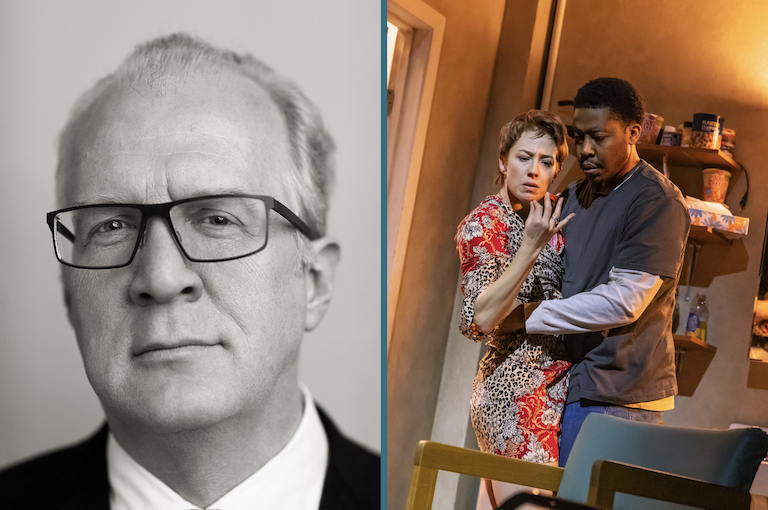
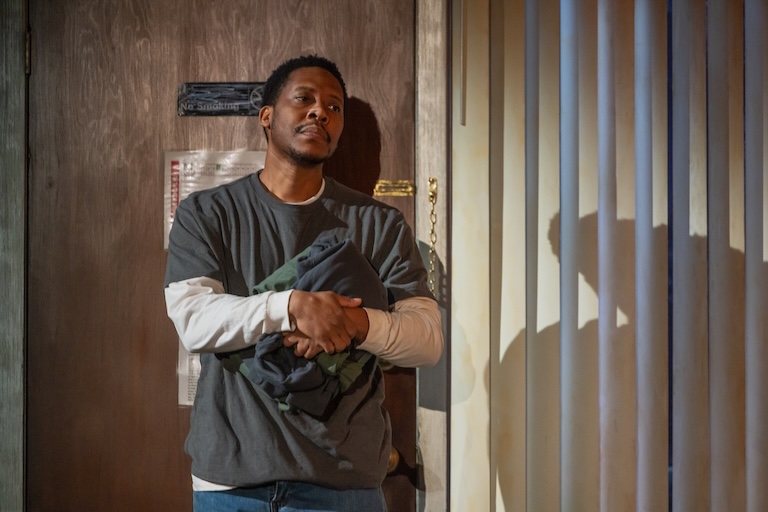
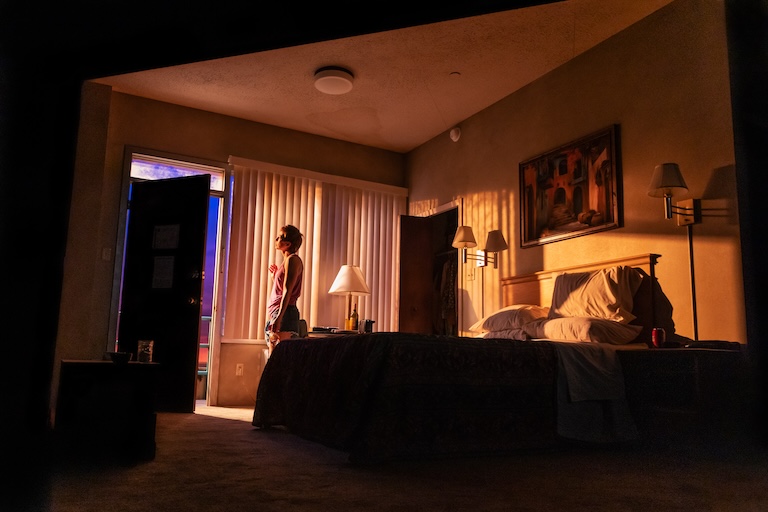
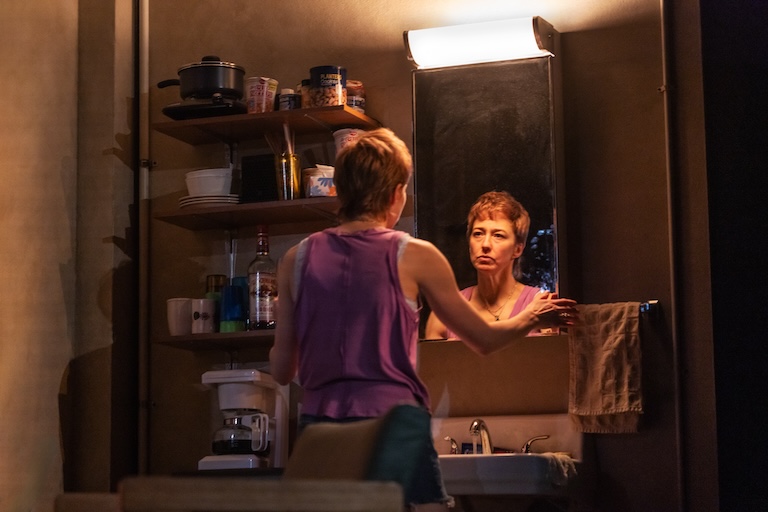
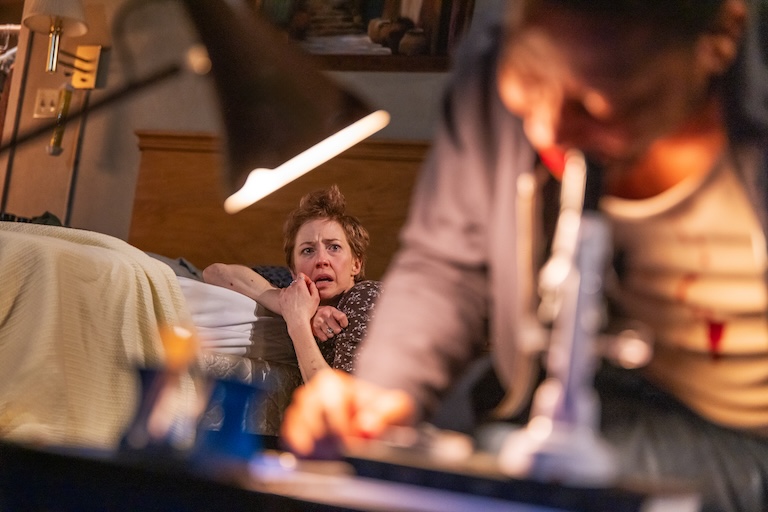
In the final scene of Tracy Letts’ Bug, Peter, a drifter with a chequered history of military service, articulates his worldview to Agnes, his partner of only a few weeks:
“May the twenty-ninth, 1954, a consortium of bankers, industrialists, corporate CEOs, and politicians held a series of meetings over three days at Bilderberg Hotel in Oosterbeek, Holland […] They devised a plan to manipulate technology, economics, the media, population control, world religion, to keep things the way they are. They have continued to meet once a year, every year, since that original meeting.”
Peter’s words — not to mention his earlier warning about “all the technology, and the chemicals, and the information” contaminating the earth and the constant “working” and “humming” of the “machines” — echo contemporary anxieties and online screeds about the consolidation of wealth by the upper crust and the overnight proliferation of AI into every facet of personal and professional lives.
But surprisingly, Letts wrote the play over 30 years ago.
As the Pulitzer Prize-winning playwright of August: Osage County shared with Ben Brantley of the New York Times during rehearsals for Bug, when the play debuted three decades ago, many considered it “this weird little sci-fi play,” but “it doesn’t seem like science fiction” anymore.
Now, Peter’s eerily resonant and disquieting words could earn Letts a Tony Award nomination in the Best Revival of a Play category, which would be a first for one of his works. He previously won a Tony for in Best Play for August: Osage County in 2008, received a nomination in the same category for The Minutes in 2022, and claimed an acting trophy for the 2013 revival of Who’s Afraid of Virginia Woolf.
As The Windowcard previously reported, the 2026 Best Play Revival roster could be the most prestigious in Tony Awards history, with four Pulitzer Prize finalists or winners – Becky Shaw, Death of a Salesman, Marjorie Prime, and Proof — all nominated in the same year. Although Bug did not receive that distinction, Letts won the Pulitzer for August, and juries named him a finalist two other times, for Man from Nebraska in 2004 and The Minutes in 2018.
Letts contends for the Tony nomination this year for Bug courtesy of a rule implemented in 2019. The Tony administration committee deemed that playwrights are eligible “provided they are living at the time and the work did not have any prior presentation in an eligible Broadway theatre,” per the Playbill announcement seven years ago. The stipulation is an important corrective for dramatists, as playwrights had previously only received recognition if their work wins the top honor of Best Play; the ceremony does not feature a separate writing category for dramas as it does Best Original Score and Best Book for musicals.
If Letts earns the nomination on Tuesday, May 5, he will join an esteemed, exclusive lineage of dramatists who have received recognition in both the Best Play and Best Play Revival categories; only five playwrights have done so over the past seven years since the rule was implemented.
In the first year of eligibility, Harvey Fierstein accomplished the feat, earning a Best Play Revival nomination for the remounting of Torch Song. Even though it won the Tony for Best Play in 1983, Fierstein earned a nomination for the revival because of the significant revisions he made to the text. The Tony administration permits this type of nomination for “substantially re-worked” dramas as well. He has one additional Best Play nomination for Casa Valentina in 2014.
The following season, Terrence McNally earned a nomination for Frankie and Johnny in the Clair de Lune; it was not the first production of the play on Broadway nor the first time the show contended for the Revival prize, but because it was never eligible for Best Play and the first Revival bid predated the 2019 rule, McNally earned the bid. His extensive curriculum vitae in Best Play includes wins for Love! Valour! Compassion! in 1995 and Master Class in 1996, plus a nomination for Mothers and Sons in 2014.
Following the fallow, coronavirus pandemic-shortened season, Paula Vogel earned a revival nomination for the first Broadway production of her Pulitzer-winning How I Learned to Drive in 2022; she had a previous Best Play nomination for Indecent in 2017 and earned a subsequent one for Mother Play in 2024.
Branden Jacobs-Jenkins accomplished this feat in two consecutive years. In 2024, his play Appropriate, first staged Off-Broadway a decade earlier, won Best Play Revival, and one Broadway season later, his Pulitzer Prize-winning Purpose took Best Play.
Rounding out this storied quintet is David Henry Hwang, who earned a Best Play Revival nomination last year for Yellow Face, his Pulitzer finalist work that premiered Off-Broadway in 2007. He previously won Best Play in 1988 for M. Butterfly — also a Pulitzer finalist — and reaped a second nomination a decade later for Golden Child.
In all, nine total dramatists have been recognized with Tony nominations for their revivals. In addition to the above, they include: Mart Crowley for The Boys in the Band and Kenneth Lonergan for The Waverly Gallery in 2019, Charles Fuller for A Soldier’s Play in 2021, and Jonathan Spector for Eureka Day last year.
In this crowded season of eleven play revivals, The Windowcard does not predict Bug to make the final roster of five nominees, projecting instead Death of a Salesman, Oedipus, Becky Shaw, Joe Turner’s Come and Gone, and Marjorie Prime. Should there be a statistical tie for the final slot in the category between two or amongst three contenders, Bug could very likely earn a nomination in an expanded field of six or seven, as it’s likely jockeying for that position with Proof and Fallen Angels.