
Insatiable Appetites: What ‘The Wild Party’ at Encores! Said About The New Broadway Musicals This Season
David Buchanan
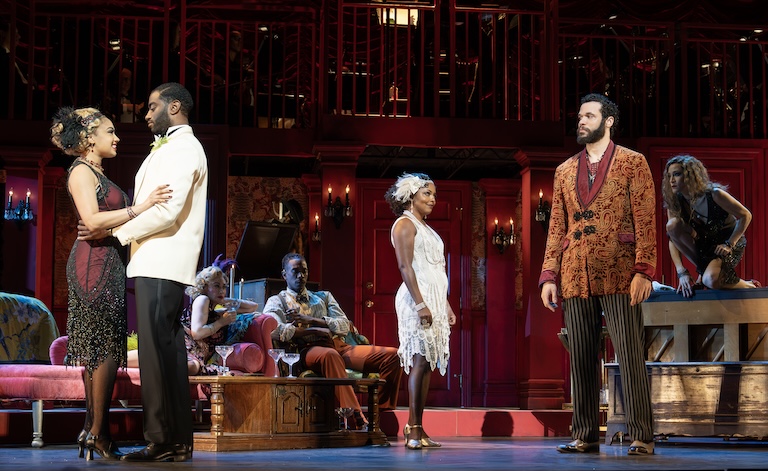
Why, on the day of the 2026 Tony Awards, which will celebrate four original musicals and four musical revivals, am I still ruminating on the off-Broadway remounting of The Wild Party that closed over two months ago?
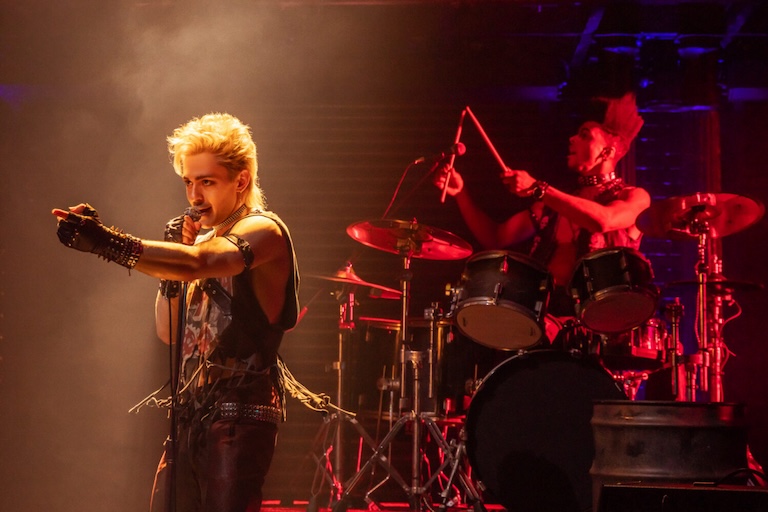
The New York City Center Encores! production, a presentation of Michael John LaChuisa and George C. Wolfe’s 2000 musical, starred Broadway sensation Jasmine Amy Rogers, Tony Award winner Adrienne Warren, and a never-better Jordan Donica. An adaptation of Joseph Moncure March’s poem, the musical centers on an evening of debauchery set against the backdrop of prohibition, vaudeville, and intersecting dynamics of gender and race.
In part, I continue to think about The Wild Party because of its numerous impeccable performances and the miraculousness with which these theatre artists successfully wrangled this complex material in only a few weeks’ time, off book and with full choreography. To wit, the production earned four Drama League Award nominations, for Musical Revival, Direction of a Musical, and for performers Rogers and Warren.
But predominantly, I keep returning to this show because of its complex and challenging material, and the way in which its difficulty extended beyond the proscenium to the audience itself. In a Broadway season consisting largely of easily digestible new musicals, The Wild Party made the main stem roster seem tame by comparison, privileging entertainment over intellectual rigor.
I say “easily digestible” intentionally because The Wild Party itself uses food as an overarching metaphor to address the disequilibrium between demand and supply: of liquor, of advancement, of fulfillment.
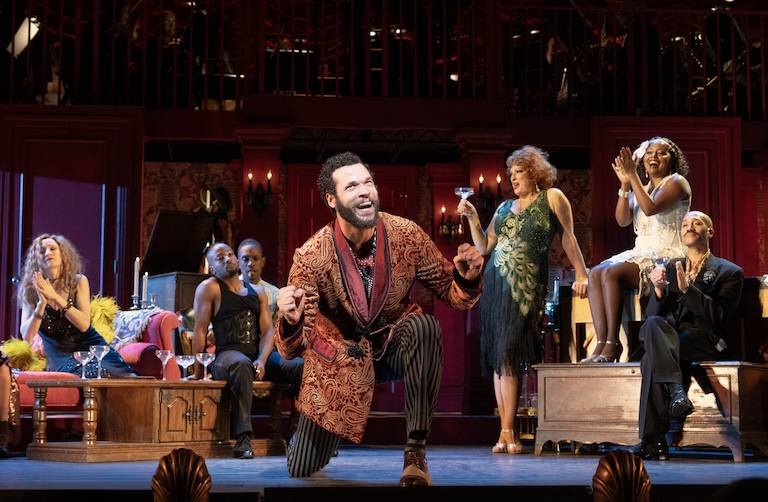
Mere scenes into The Wild Party, for example, the tragically coupled vaudeville performers Queenie (Rogers) and Burrs (Donica) welcome a “promenade of guests” into their “sensual, stylish, and cheap” apartment for the title romp. Upon their arrival, each reveler in the horde begs their hosts, “Don’t let me go dry,” arms outstretched for liquor in the age of prohibition.
Under the direction of Lili-Anne Brown, this stage picture of the ensemble, with countless coupe glasses raised surrounding the performatively genial Burrs and his singular, near-empty bottle of champagne, encapsulated the show’s theme of unquenchable thirst colliding with paltry provisions.
As the introduction to the musical’s festivities, the scene serves as an exuberant beginning to an evening of increasing lecherousness and danger. It also primes the audience for a musical speckled with morsels of insightful food similes that comingle character dynamics and socioeconomic conditions.
Indeed, Wolfe and LaChiusa pepper throughout their libretto comparisons that nod toward their characters’ insatiable appetites. During “Welcome to My Party,” Dolores — an elder star of the stage regally portrayed by Tonya Pinkins — says Queenie looks “delectable. Like a little puff pastry someone’s already taken a bite of,” an underhanded compliment that undercuts Queenie’s allure with a note of discarded disgust.
And on two occasions, Burrs defensibly describes himself and Queenie as “happy as clams,” though the mental image Donica conjures in his ferocious performance is more a violent feast of a man scarfing food down his gullet than two jolly mollusks.
Interpreted through a lens of unfulfilled gastronomic desire, The Wild Party feels like a funhouse mirror companion piece to Stephen Sondheim and David Ives’ Here We Are, another production staged off-Broadway back in 2023 — two years after the passing of the legendary composer — under the direction of Joe Mantello.
In that musical, inspired by two films of Luis Buñuel — Act 1, The Discreet Charm of the Bourgeoisie; Act 2, The Exterminating Angel — the central characters sit atop the upper-echelons of New York society, polar opposites of Queenie, Burrs, and their ragtag guests from a century earlier. But they similarly cannot find satiation, in this case because of increasingly bizarre circumstances at each restaurant they attempt to patronize. After Buñuel, Ives pairs this surrealism with an undercurrent of plunder of global resources and a nebulous uprising of the working classes.
It is perhaps not a surprise that in the 2020s, such demanding, niche works find transient homes off-Broadway. Is there even an appetite for such heady fare on an increasingly commercialized Broadway?
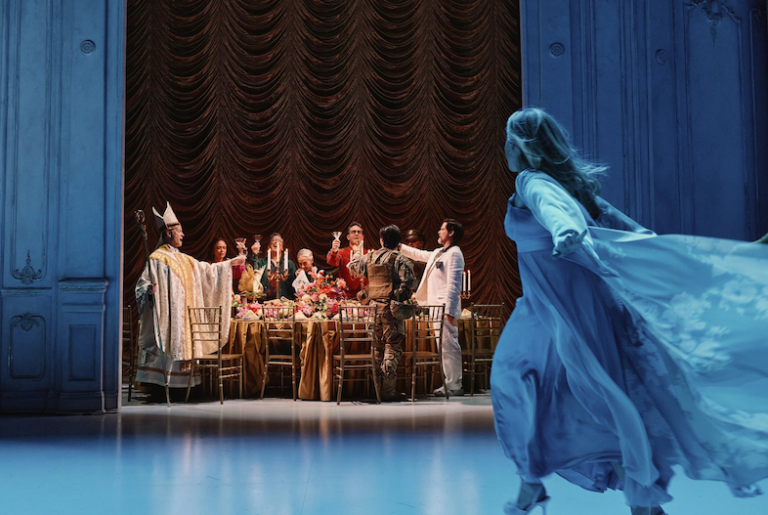
Attending The Wild Party back in March, right on the cusp of the April’s overabundance of Broadway openings, threw in stark relief how the theatre industry currently does indeed have a similarly insatiable, largely unmet appetite for challenging musical theatre.
This is a sentiment Wesley Morris recently expressed in the Tony Awards edition of the New York Times podcast Cannonball. He reports enjoying some of the fare from this spring on Broadway but says, “I also missed work that made me uncomfortable in a good way, that challenged what I thought the theater could be — to be wild and weird and tamed, but challenged. What I missed was difficulty.”
What could be more challenging that a musical whose second song begins with Burrs, in Brown’s staging, exploding from a vaudeville trunk “in blackface… hurling onstage as if shot from a cannon, or fleeing from hell”? Or one that ends with Queenie and the now-deceased Burrs both stripping the makeup from their faces — their performance and performative masks — in front of the audience?
What The Wild Party does incredibly well in between these tentpole moments, which likely made contemporary audiences uncomfortable, is interrogate the socioeconomic, political, racial, and gender dynamics that shaped the assemblage of marginalized peoples who came together for a fateful night of seemingly unencumbered pleasure.
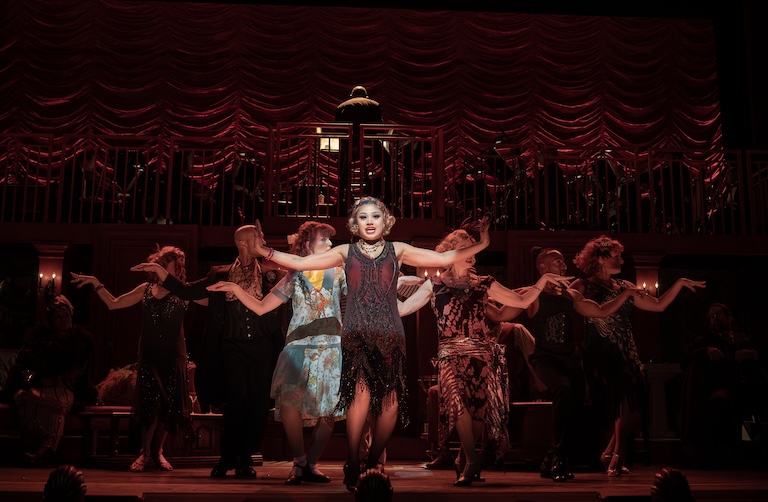
The industry certainly turned out for the event, hungry for their first glimpse of this material in New York in over a quarter century. The Thursday night press performance that The Windowcard attended featured as starry an audience as the ensemble on stage. The Gilded Age’s Cynthia Nixon and Donna Murphy came to cheer their costar Donica. Pulitzer Prize-winning librettist James Lapine, two-time Pulitzer finalist David Henry Hwang, and younger thespians Helen J. Shen and Wesley Taylor all congregated in the aisle Orchestra Left, too.
The timing of The Wild Party in Encores! season, which also featured High Spirits and will soon boast La Cage Aux Folles, also mattered. The two-week run bowed at a critical juncture in the Broadway musical theatre landscape. Last season boasted a glut of 14 original musicals, seven of which have already closed. Three of the five productions nominated for Best Musical at the Tonys continue to run; Death Becomes Her closes this month, while the most esoteric work, the brutally macabre, potently critical Dead Outlaw, shuttered too quickly.
Wary of the fate met by many of those prestigious productions, producers of the Broadway musical constricted original works this year, with only six bowing in the past 12 months; Beaches and The Queen of Versailles have already ended.
Those that remain from this year and compete at tonight’s Tony Awards are predominantly high-octane entertainment, from the moody, atmospheric spectacle of The Lost Boys to the ebullience and knowing nod to Broadway’s Golden Age that is Schmigadoon! These productions lead all others in Tony nominations with a lucky dozen apiece. But neither of them, nor Two Strangers (Carry a Cake Across New York) or the parody Titaníque, confront the audience too intellectually or with the level of emotional ambiguity that The Wild Party did.
This is not to undersell the merits of those and other original works this season. For all of its awe-inspiring theatrics, The Lost Boys also contains a subtle critique of capitalism and the exploitation of the working class: the vampires hide away in an abandoned ironworks, the site on which multitudes of workers were killed during an earthquake; a later scene features the ensemble, all dressed in a muted uniform, succumbing to the vampires. These contextual clues layer on top of a long lineage of comparisons connecting capitalism to vampirism.
But rather than suss out hints at how the contemporary musical may operate beyond spectacle and speak at a higher register, one hopes future seasons will make these traces more explicit. The works already showing such promising include next Broadway season’s Wanted, The Public Theater’s Girl, Interrupted, with a score by the luminous Aimee Mann, book by Pulitzer Prize-winning playwright Martyna Majok, and direction by Jo Bonney, and the stage adaptation of Black Swan at A.R.T. with score by Dave Malloy, book by Jen Silverman, and direction by Sonya Tayeh.
Although potentially unfair to compare The Wild Party, a musical penned over 25 years ago, to this season’s new works instead of its revivals – Ragtime, CATS: The Jellicle Ball, The Rocky Horror Show, and Chess – the exercise helpfully illuminates how the imperatives of the “Broadway musical” have shifted in only a quarter century.
And although The Wild Party seems less likely to transfer than other recent Encores! productions, including the Into the Woods from four years ago and this season’s Ragtime — both directed by Lear deBessonet — one hopes that we will see this sumptuously staged, difficult musical again soon. Lord knows we’re all hungry for it.