
‘It’s A Comedy That Also Punches You in the Lungs’: Tony Award nominees Jocelyn Bioh and Whitney White Talk ‘School Girls; Or, The African Mean Girls Play’
David Buchanan
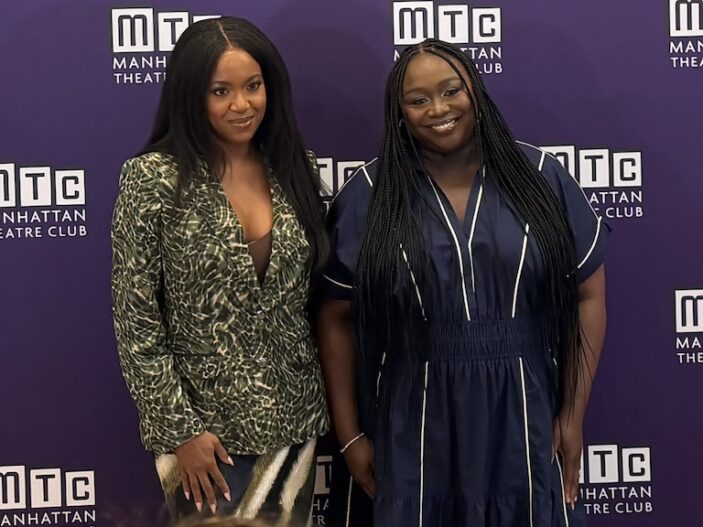
“We’re the only Black female team working on Broadway this season so far, and it’s an opportunity we take with a lot of pride and pleasure,” reflects director Whitney White on bringing Jocelyn Bioh’s play School Girls; Or, The African Mean Girls Play to Broadway almost a decade after its New York City debut at MCC Theater.
School Girls reunites the playwright and director, who previously collaborated on the 2023 Broadway production of Jaja’s African Hair Braiding, which earned both of them their first-ever Tony Awards nominations for Best Play and Best Director, respectively. Manhattan Theatre Club produced Jaja’s and returns again for School Girls.
The production, which begins previews on September 8 and opens September 28, boasts an acclaimed ensemble including Tony winner Patina Miller and Tony nominees Denée Benton and Jasmine Amy Rogers. Set in Ghana in 1986, School Girls centers on the conflict between Paulina (Benton), the most popular girl at the Aburi Girls Boarding School, and Ericka (Rogers), a new pupil who arrives from the U.S., as they vie to be considered for the Miss Ghana pageant.
The Windowcard attended the official School Girls press day on Monday, August 17, roughly one week after rehearsals on the Broadway production began, and spoke with Bioh and White about their continuing collaboration, the play’s long journey to Broadway, their “magic” ensemble, and more. Read our lighted-edited discussion:
The Windowcard: Jocelyn, take me back ten or so years ago when you first wrote the play. What was your writing process, and how easily did you find these characters on the page?
Jocelyn Bioh: Here’s an exclusive. Ten years ago, I was in the ensemble of a Broadway show on the same street that School Girls now is going to premiere. I was at the Barrymore, I was in the ensemble of The Curious Incident of the Dog in the Night-Time, and I started writing this play in my dressing room. It was a scene that came to me, I said, ‘Let me work on this,’ and it was largely what is the first scene of the play. I never could have imagined that that moment, that day that I opened my laptop and started writing a play in my dressing room, that ten years later I would be here. It is just unbelievable!
Whitney, tell me about the first time you saw or read the play. If you saw the original production at MCC, how did you experience the piece?
Whitney White: Before seeing that play, I had seen Jocelyn Bioh perform on stage. She’s an iconic performer. Her performance in Everybody [by Pulitzer Prize winner Branden Jacobs-Jenkins] was incredible. I saw the play, and what I remember was feeling transported to a different space, and that’s such a gift, when theatre can really transport you to somewhere else. I also remember just loving those girls so much. Those are the two things I’m holding on to: I want to transport the audience somewhere else and I want you to fall in love with those characters.
Is there a particular scene—either when you saw the first production or when you immersed yourself in the written text—that really inspired you?
White: From the moment I met Jocelyn Bioh, I just knew I wanted to be working with her. It didn’t matter whether I was directing for her or whether she would be on stage, which I secretly hope she’ll be in one of my plays very soon. But from the moment I met her, I got the overwhelming sense I was in the presence of greatness, and I’m so happy that we all get to be in the space together.
Jocelyn, School Girls has been performed all over the country, but did you ever expect it to find its way to Broadway?
Bioh: No, I didn’t because ten years ago, the landscape of Broadway was very different, and I was told expressly—but with love—that my play was a great play but it wasn’t a Broadway play, and the power of words is I believed it. When I got the phone call not that long ago that this play was going to go to Broadway, I was like “Wow.” It’s just the one thing I never imagined and it’s because I believed in something and I think that that’s part of what I’m trying to get and express in this play, is that there are these young girls who are trying to push against a thing about beauty standards, about colorism, about body image, push again the thing that’s, unfortunately, they have no choice but to believe. I’m just hopeful that I can shift even one audience member to just feel differently, because I’m learning something new even now.
As a playwright, how does it feel to read and revisit your play a decade after writing it? Has your relationship to School Girls changed or evolved?
Bioh: I can’t believe how honest I was! There are many lines that I do not remember writing, that I do not recall being that vulnerable, so I think I’m really shocked that I didn’t censor myself all those years ago, and I think proud that I did it. If I was to start writing School Girls; Or, The African Mean Girls Play today, I think my approach would have been wildly different and maybe with more censorship. I’m really appreciating who I was then and really wanting to give her a little pat on the shoulder and say, “You did good, kid! It didn’t feel that way when you were a broke starving artist, but you did good, and you’re going to land on your feet.”
Whitney, you put together an amazing ensemble for this production. What were you looking for in particular during your casting process, and how did you know bringing this group of artists together would be successful?
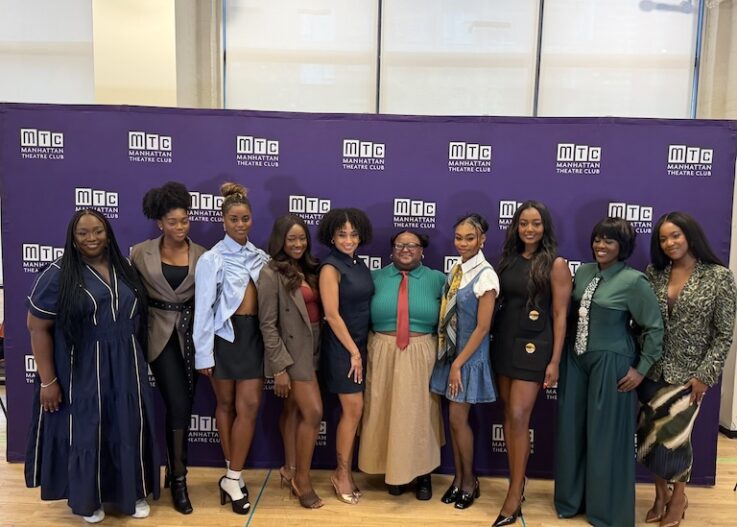
White: Every day we give our all to this process because we know how important it is. We’re the only Black female team working on Broadway this season so far, and it’s an opportunity we take with a lot of pride and pleasure. What I was looking for in the cast: I just wanted powerhouses who wanted to play, who wanted to be there, who understood the themes of it. It’s a comedy that also punches you in the lungs. That’s hard to straddle. It’s not all comedy, it’s not all drama, just like life.
Jocelyn, now that you and the team have been in rehearsals for about a week, is there a scene with this extraordinary ensemble that you’ve seen so far that is crackling for you or that is hitting you differently than you originally thought?
Bioh: The whole play. That first read-through of the play was magic. You could have put that thing on Broadway the next day, it was unbelievable. I’m continuing to learn from their fresh perspectives and approach. It’s the most iconic company on Broadway, I think. I’m biased, of course. It’s going to be magical.
Whitney, almost all of your Broadway shows have been large, ensemble pieces, with the obvious exception of The Last Five Years. What do you love most about working with a big, ensemble cast and a big, expansive palette?
White: I love seeing different colors. I’m a musician and I love symphonies. I love the orchestra. My mother used to take me to see the Chicago Symphony Orchestra every summer, and I think that experience has had a big effect on me because I love how the voices are cacophonous, I love when they’re in harmony, I love having people that represent lots of different kinds of people, I love humanity. In an ensemble play, you get to play with humanity and build a world. I find it very fulfilling and stimulating.
Speaking of large ensembles, could you reflect on the experience of Liberation? Last season, it won Best Play at the Tony Awards, the Pulitzer Prize for Drama, and earned you another Tony nomination for Best Director. Bess Wohl’s play is magnificent, and your production was equally magnificent in bringing it to life.
White: Liberation just reminded me once again that art can be political, and it can be political and invite lots of people to the table on either side of the aisle. What we should be striving to do with theatre is creating dialogue. We should be trying to talk to each other, not just to our closest friends but to the people who are most different from us. I sometimes get discouraged because people can be so afraid to have any kind of meaningful conversation at all, and Liberation just reminded me don’t be afraid, put it into the work, invite everyone into the room, and maybe you’ll have a conversation that’s productive. And likewise, School Girls is asking us to have a big conversation on beauty and colorism and how culture moves and once cultural barriers fall down and things from the West flood in, people change, people are affected, and I look forward to seeing what dialogue popcorns out of this experience.
Let’s talk about your design team, too. You’re reuniting with costume designer Qween Jean, also a Tony nominee for Liberation and winner for CATS: The Jellicle Ball. What do you love most about your collaboration with her?
White: Qween Jean is one of our greatest artists and political thinkers. She’s a visionary, she’s a community leader, and when I met her, she transformed my life. I think this is our ninth or tenth production together, and every time, we treat it like it’s our first time. I think that’s why we enjoy working with each other, because the relationship between a director and costume designer is a special one because those are our people on stage and you’re shielding them and helping the story move all over them. I just love working with her, and she gives a lot to the process.
Jocelyn, Whitney mentioned earlier that School Girls is “a comedy that also punches you in the lungs.” Indeed, the play is incredibly funny and breezy, but it’s also deeply poignant. How do you strike that balance on the page, and how do you know when you get it just right?
Bioh: I don’t always know when I get it right, which is why I rewrite and rewrite until I feel like it’s right. This play went through over 30 drafts before we finally landed at what people eventually saw on stage nearly a decade ago and will see on Broadway. Maybe something will shift for me and I’ll do some tweaks again. It’s a living breathing thing and I never want to feel like I’m not telling the truth, and the moment I do, I go back again. I just kept going until I got there.