
‘It Was Such a Controversy’: Costume Designer Gregg Barnes on Sally's Infamous Red Dress in ‘Follies,’ 15 Years Later
David Buchanan
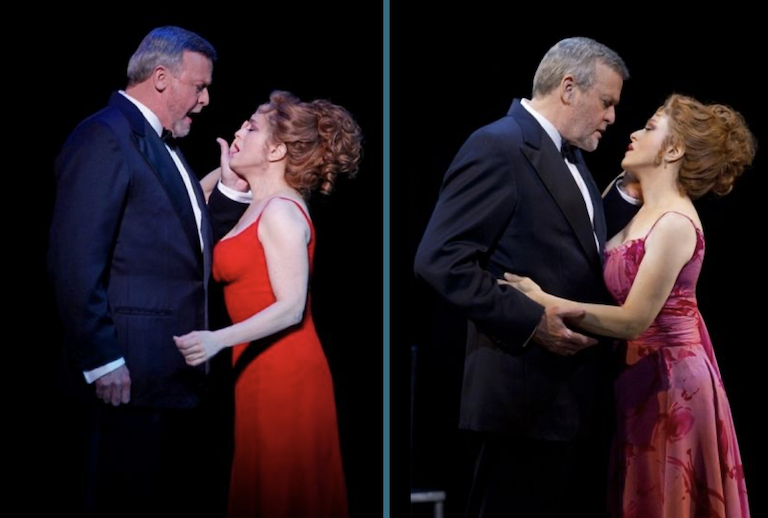
Earlier this month, the 2011 Broadway production of Stephen Sondheim’s Follies, which opened at the Marquis Theatre on September 12 following a run at the Kennedy Center, marked its fifteenth anniversary. To commemorate the occasion, The Windowcard revisits one of the most storied elements of the revival and its transfer, namely, the color of character Sally Durant Plummer’s dress, and publishes for the first time costume designer Gregg Barnes’ comments on the controversy.
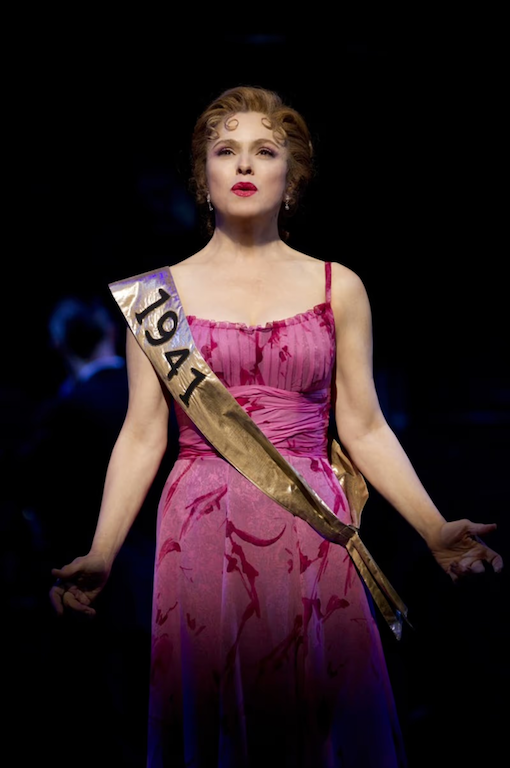
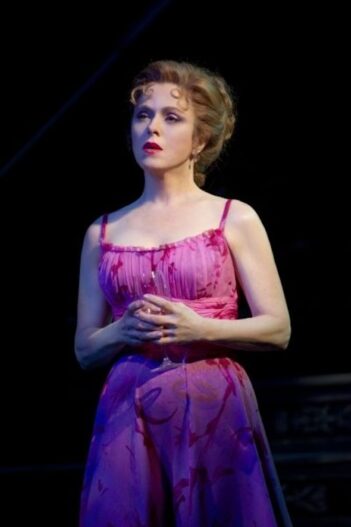
As originally conceived for the 1971 production of Follies by costume designer Florence Klotz, the outfit for Sally, a former performer in the Weismann follies who comes to a reunion with deluded hopes of rekindling her decades-dead romance with Benjamin Stone, was intentionally dowdy. In Everything Was Possible: The Birth of the Musical Follies, production gofer turned indispensable documentarian Ted Chapin described Sally’s dress as “frumpy,” and “pink, sleeveless, and full of flowers” (Chapin 2022, 141).
The many Follies purists who descended on the historic Washington, D.C., venue for the first performances of the revival in May 2011 were surprised, then, to see star Bernadette Peters as Sally costumed in a vibrant red, form-fitting dress, seemingly anything but “frumpy.”
While some early attendees called the dress “extremely classy,” “perfect,” and “glamorous,” the dissenters were certainly vocal in their disapproval. Sally “has not been living a glamorous life and would not have such a dress. […] She would choose the nicest of her middle-aged outfits from her closet,” read one message board comment. Another interpreted the character as “a delusional woman trying to turn back the clock, not a hot seductress fighting to win an old flame away from his wife,” as the lively red dress suggested. A third, more harshly, simply declared, “The dress in question displays a shocking lack of understanding of the character’s psychology or emotional state.”
If the color and cut of the garment seemed to betray the version of Sally that fans of the legendary musical had known for 40 years and first portrayed by Dorothy Collins, it at least reflected the deliberate and clear thought process of its wearer. In an interview conducted during the early days of the Kennedy Center run that featured cast members Jan Maxwell, Danny Burstein, Ron Raines, and Elaine Paige, Peters explained that Sally wears red because she has come to the Weismann reunion “to find Ben, get noticed, [and] hopes he notices her, so she wears red. He can’t miss red. Anywhere she’s standing, he’s going to see this red flash… She has to be noticed, that’s her thing, for him.” Watch the complete panel discussion below.
By the time the Washington production opened, critics were as “betwixt and between” on the dress as the fervent theatergoers. Variety’s Paul Harris commented, “Peters looks terrific in a simple scarlet dress that contrasts beautifully with the muted tones of the disheveled surroundings.”
But the New York Times’ Ben Brantley pinpointed the same disconnect between the dress’ style and the character’s background that certain audience members did, assessing, “Ms. Peters, a vibrant knockout in a tight red dress, is hardly the frumpy, banal Sally who is described to us. Ms. Peters exudes such exotic star shine, you feel that Sally’s real tragedy wasn’t that she lost the man she loved […] but that she wasn’t allowed to spend her life with a follow-spot before throngs of adoring fans.”
According to costumer Barnes, it was precisely this review, not the online furor, that led him and Peters to jettison the eye-catching red dress during the transfer from Washington to Broadway. When I sat down with Barnes at the 2025 Tony Awards Meet the Nominees press day, which the costumer attended as a nominee for BOOP! The Musical, he revealed the reasoning behind his original choice and the impetus to make the change:
“It was such a controversy! When the review came out at the Kennedy Center, it said because she’s wearing this red dress, it looks like a vanity production. And [Bernadette] is so smart, she said, ‘That’s not the show I want to be in,’ so we regrouped. It was guided by conversations. In the moment, I thought, if you’re Bernadette Peters, and you live in Arizona, and you’re coming to this reunion and you want to seduce [Ben], a red dress doesn’t sound that far afield to me, but it made people crazy.”
By the first preview in New York City in August, the red garment had been replaced with a muted pink one boasting a floral arrangement and a slightly looser fit. “It was much better,” mused the designer in our interview. Indeed, those savvy thespians felt similarly, declaring it “perfect,” “absolutely marvelous,” and “much more ‘Phoenix housewife’,” referring to Sally’s hometown with her husband, Buddy.
Brantley seemed to take notice, too. Commenting on the difference between productions at the Kennedy Center and Broadway, the Times critic wrote that the star “has connected with her inner frump,” expanding, “Ms. Peters, who in Washington looked entirely too sexy to be Sally, now has the eloquently crestfallen aspect of a woman who’s almost given up on life but sees the glimmer of a last chance. The new wig and dress help to play down her natural radiance.”
During our conversation, Barnes revealed precisely how he and Peters selected the new, perfectly appropriate dress. “I had a lot of pinks in the room to look at with her and on her, and that was the boldest one,” recalls Barnes of their New York costume fitting, continuing, “I was so afraid of it because of this reaction, and [Bernadette] said, ‘That’s the one.’ I hope we wandered far enough away from the original.” Tony Awards voters certainly seemed to think so, as nine months later, Barnes won the trophy for Costume Design, his second career win and the only prize the revival took home that night from its eight citations.