

Long-form theatre journalism and opinion covering Broadway, the Tony Awards, and beyond.
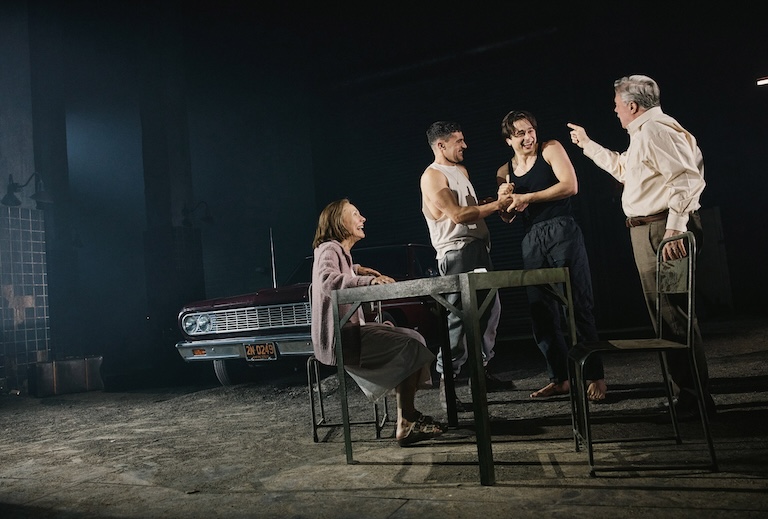
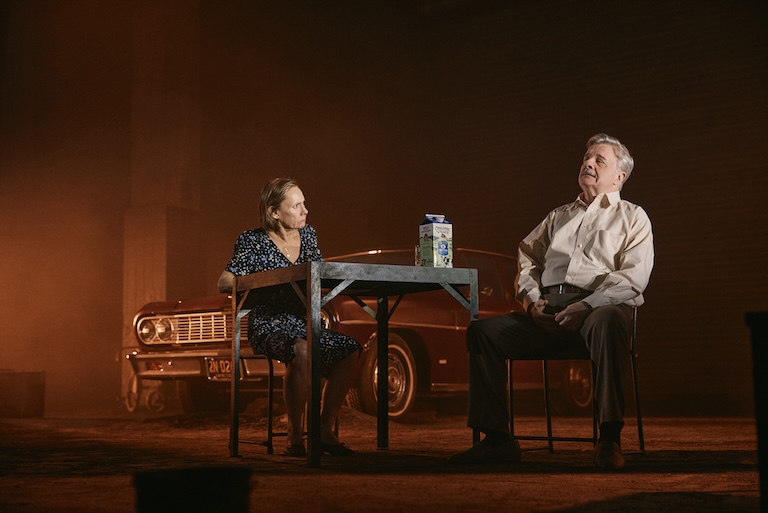
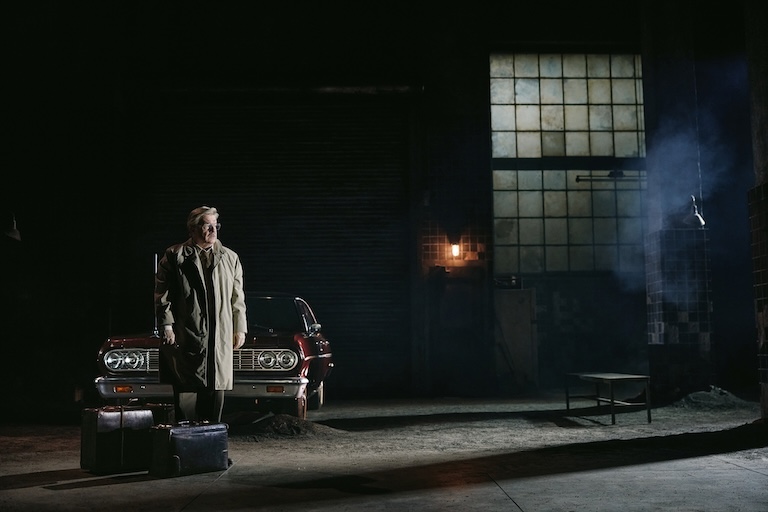
Joe Mantello’s paradigm-shattering production of Death of a Salesman could tie a rare Tony Awards record at the upcoming ceremony, should the night unfold well for the Loman family.
Nathan Lane, Laurie Metcalf, and Christopher Abbott, who portray Willy, Linda, and Biff Loman, are all strong contenders to take home acting prizes in their respective categories. Should all three win awards, it would mark only the fourth time in the nearly 80-year history of Broadway’s top honor that a single production of a drama has won three acting trophies in one night, and the very first time for a play revival.
Tom Stoppard’s The Real Thing broke ground 42 years ago, when Jeremy Irons won Actor, Glenn Close Actress, and Christine Baranski Featured Actress. The production also received two more prized trophies for Best Play and director Mike Nichols.
Nine years later, Neil Simon’s Pulitzer Prize-winning Lost in Yonkers did the same, notching commendations for Mercedes Ruehl in Actress, Kevin Spacey in Featured Actor, and Irene Worth in Featured Actress. Though the production also took home Best Play, it did not exactly replicate The Real Thing’s success, as director Gene Saks lost to Jerry Zaks for Six Degrees of Separation.
The most recent instance of this infrequent threepeat happened a distant 28 years ago, when Martin McDonagh’s The Beauty Queen of Leenane claimed Actress for Marie Mullen, Featured Actor for Tom Murphy, and Featured Actress for Anna Manahan. While the production surprisingly didn’t take home Best Play — Yasmina Reza’s Art prevailed, though this season’s revival fell completely flat with Tony nominators — it did win Best Director for Garry Hynes; Hynes is notably the first woman to win the play directing prize, and only five other women have done so in the nearly three decades since.
Will Death of a Salesman’s trio of performers pull off this rare feat?
Although demonstrably hard to accomplish, the exceptional — and exceptionally well-received production — has a considerable chance at tying history.
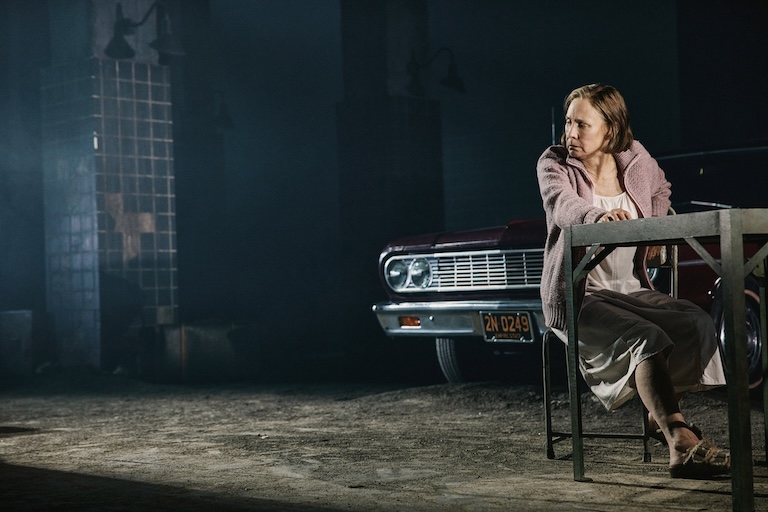
Laurie Metcalf sits in best position of the three Lomans to win, which would mark her third Tony after successes with A Doll’s House, Part 2 in 2017 and Three Tall Women in 2018. Tony nominators and voters alike have demonstrated their affection of Metcalf repeatedly across the last 13 years, during which she’s appeared on Broadway nine times. In addition to Salesman, she has five nominations during that period and notably won her two awards consecutively.
Metcalf’s subtle reinterpretation of Linda makes her an undeniable frontrunner. The veteran stage actress emphasizes beats in Linda’s lines that often go unadorned. Revisit, for example, her unconventional approach to the scene in which Linda utters the play’s famous words, “attention must be paid.” As the actress revealed to me in an exclusive interview for Gold Derby, she considers the climax of that scene not that line, but rather Linda’s admission, “I don’t know what to do.” To wit, I won’t soon forget the sound she utters when she confesses to Biff and Happy (the criminally overlooked Ben Ahlers) that it is hard to even reveal to them that Willy has repeatedly attempted suicide.
Equally new is her decision to eschew Miller’s two stage directions that Linda sobs during the Epilogue; instead, Metcalf plays Willy’s death as a betrayal: “I can’t figure it out… It’s like a betrayal. I’ve lost the teammate, the partner in the end,” she told me.
It doesn’t hurt that her competition lacks a clear alternative. Betsy Aidem delivered an exceptionally moving performance in Liberation, but the production closed months ago and did not prove itself a juggernaut in acting category nominations that would indicate an upset. At 96 years of age, June Squibb made history starring in the first Broadway production of Marjorie Prime, but that production closed longer ago than Liberation — an impediment for Tony voters who weren’t able to see its fall 2025 run — and the show overall barely registered with nominators, earning only one other bid for stalwart Danny Burstein. Theatre legend Marylouise Burke in The Balusters and Aya Cash in Giant round out the category.
On the subject of Giant competition, theatre pundits have been heavily favoring John Lithgow for his glowering performance as author Roald Dahl in the Best Actor race with Nathan Lane. But I’m wagering that his Olivier Award victory against a different field weighs too greatly on the minds of these prognosticators. Notably, Helen Shaw of the New York Times, who personally prefers Lithgow’s performance to win, projects Lane will sway more Tony voters because the “award often goes to the part as much as the person, and there’s no greater part in the canon than Willy Loman.”
Lane indubitably rises to the challenge of Willy. Yes, we have seen numerous takes on the world-weariness of Willy Loman on Broadway and beyond, but Lane so thoroughly hollows himself out by the end of Arthur Miller’s tragedy; see the frightening look of enfeeblement on his face when his sons abandon him in the restaurant, his tears falling dramatically at the end of his final confrontation with Biff, and the unexpected command he brings in his final moments when he shushes the cacophony of voices in his head.
Coincidentally, both Metcalf and Lane won their most recent Tony Awards on the same night back in 2018, when the former won her second for Three Tall Women and Lane his third for Angels in America.
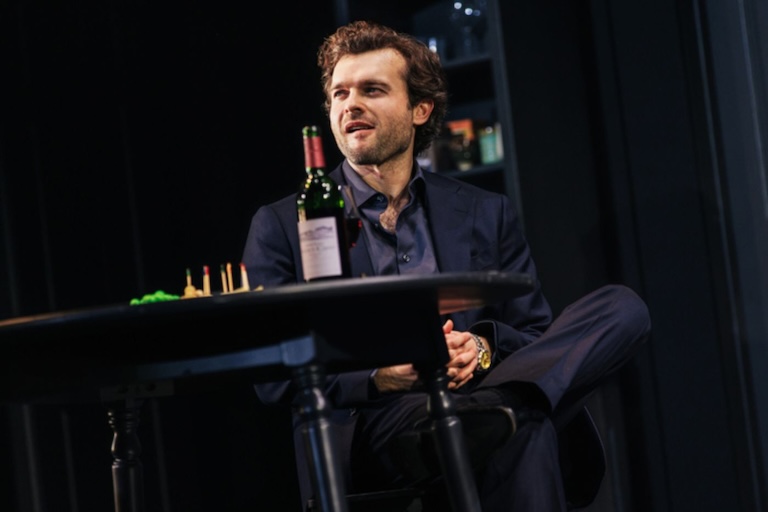
This leaves Abbott in shakiest position, and indeed, he finds himself in a suspenseful competition with Alden Ehrenreich from Becky Shaw and Ruben Santiago-Hudson from Joe Turner’s Come and Gone.
Ehrenreich has emerged as Abbott’s strongest challenger for the deliciously despicable and perversely charming Max. Ehrenreich also makes Max’s arc the most emotionally rich and fully-realized of the ensemble, which director Trip Cullman accentuates in the final moments of the production. The performer’s strength here has been signaled by the New York Drama Critics’ Circle, which awarded him their sole prize for Best Individual Performance.
But Tony nominators surprisingly did not respond particularly well to Becky Shaw; the production’s only other nomination is in Best Play Revival. It missed coveted bids in Best Director for Cullman and Featured Actress for Linda Emond, who ironically played Linda Loman in the 2012 revival of Salesman.
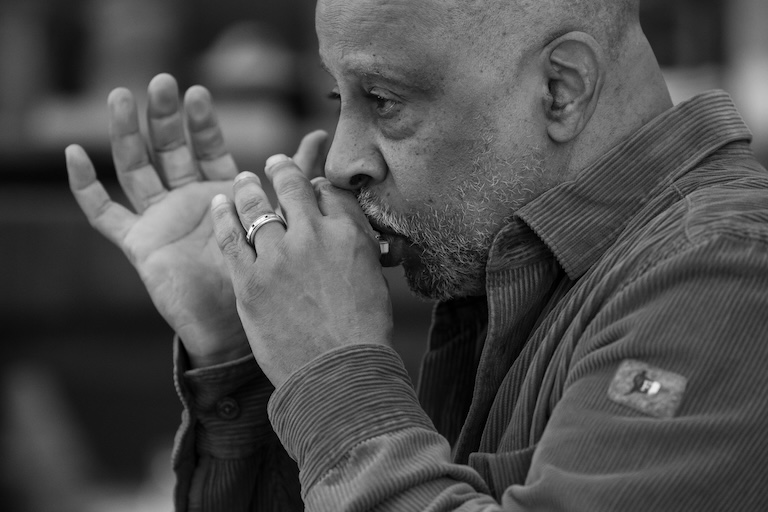
Industry veteran and beloved August Wilson interpreter Santiago-Hudson could also surprise. Bynum is the heart and soul of Joe Turner’s, and from Santiago-Hudson’s first monologue, during which he weeps recounting seeing his father in a vision, the performer captivates the audience. He imbues Bynum with infectious humor, and his delivery sharpens Bynum’s keen sense of observation, too, making his knowledge that Herald Loomis (Joshua Boone) had been conscripted to Joe Turner’s chain gang feel razor-sharp and shocking.
But Joe Turner’s Come and Gone surprisingly did not conjure many Tony nominations, either. Its five citations exclude Best Play Revival and director Debbie Allen. But Hudson could overcome those impediments through performance and stature. He won a Tony as a performer for Wilson’s Seven Guitars in 1996, received a nomination for directing Wilson’s Jitney in 2017, and surprised many with a nomination for 2022’s Lackawanna Blues, which he wrote, directed, and in which he starred. Bynum is also a Tony-winning role for Roger Robinson in Bart Sher’s 2009 production of the classic play.
Abbott’s advantage over Ehrenreich and Santiago-Hudson is the palpable emotional force of his performance, especially in the climactic scene in which Biff tells Willy that he’s “a dime a dozen,” and the shattering way in which he conveys this realization to his father. But it is the smaller, unexpected moments, too, that should stick in Tony voters’ minds, such as Biff animalistically snapping at Willy for berating his mother for interrupting their discussion of Biff and Happy’s business venture. That instinctual, almost violent turn hints at what will be revealed in the second act perhaps better than anyone has before.
The Windowcard confidently predicts Laurie Metcalf and Nathan Lane to win their respective categories and currently chooses Abbott in his razor’s-edge race. But monitor for a last-minute switch to Ehrenreich or Santiago-Hudson.